
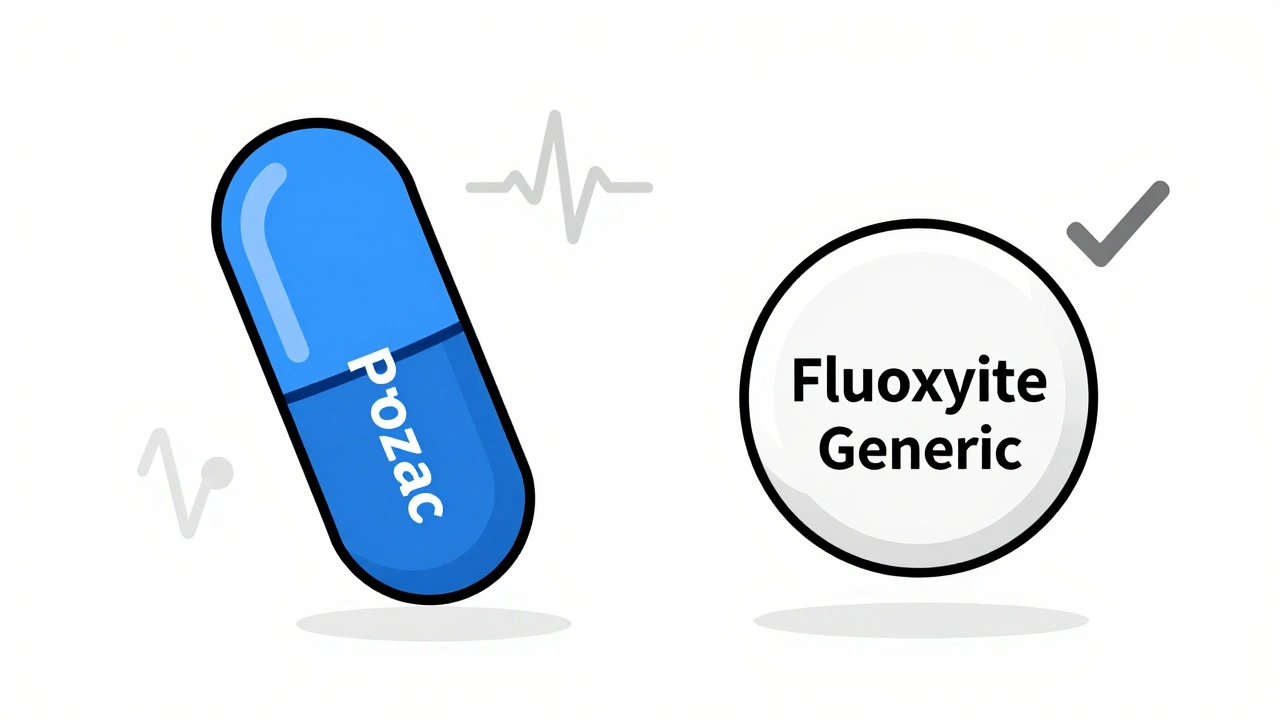
Have you ever picked up your prescription and thought, "This isn’t the same pill I got last month"? You’re not alone. A lot of people panic when their generic medicine changes color, shape, or size. But here’s the truth: generic drugs aren’t fake, weak, or inferior. They work exactly the same. The only thing that’s different is how they look.
Why Do Generic Drugs Look So Different?
The reason comes down to U.S. trademark law. It’s not about science or safety - it’s about legal protection for the original drug maker. When a company like Pfizer or Eli Lilly creates a new medicine, they spend years and billions developing it. Once it’s approved, they get a patent that lets them be the only one selling it for a while. When that patent expires, other companies can make copies - those are the generic drugs. But here’s the catch: U.S. law says those copies can’t look identical to the brand-name version. Why? Because if a generic pill looked exactly like Prozac or Lipitor, it could confuse customers or even be mistaken for the original. So, the FDA requires generics to be visually distinct. That means different colors, shapes, sizes, even different coatings. It’s not about making them worse - it’s about keeping them legally separate.Same Active Ingredient, Different Stuff Inside
The part of the pill that actually treats your condition - the active ingredient - is identical. If your brand-name pill has 10 mg of fluoxetine, so does the generic. That’s not up for debate. The FDA demands that generics prove they deliver the same amount of medicine into your bloodstream at the same rate as the brand-name version. This is called bioequivalence, and it’s tested in labs with real people. But what about the rest of the pill? That’s where things change. Generics use different inactive ingredients - things like dyes, fillers, binders, and flavorings. These don’t help treat your condition, but they affect how the pill looks, tastes, or even how quickly it dissolves. A brand-name tablet might use red dye to stand out on the shelf. A generic version might use yellow or white because that’s what the manufacturer chose. One might use lactose as a filler; another might use cellulose. None of that changes how the medicine works.Real-World Examples: Prozac, Lipitor, and More
Take Prozac (fluoxetine). The brand-name version is a bright blue capsule. But the generic? It could be a white tablet, a yellow capsule, or even a pink pill - depending on who made it. Teva, Mylan, Sandoz - all make different-looking versions of the same drug. Same active ingredient. Same dose. Same effect. Lipitor (atorvastatin) is another example. The original is a white, oval tablet. Generics come in round, blue, or even scored tablets. Some are easier to split. Others have a different coating to make them easier to swallow. None of these changes affect cholesterol-lowering power. And it’s not just pills. Liquid antibiotics, patches, even inhalers can look different in generic form. The medicine inside? Exactly the same.Are Generic Drugs Safe? What the Science Says
Some people worry that if the pill looks different, maybe it’s not working as well. But the data doesn’t support that fear. A major 2008 study in the Journal of the American Medical Association looked at 38 clinical trials comparing generic and brand-name versions of 12 different drugs. The average difference in how the body absorbed the medicine? Just 3.5%. The FDA allows up to 20% variation - so generics are well within safe limits. Even for drugs where small changes matter - like blood thinners (warfarin), thyroid meds (levothyroxine), or seizure drugs (phenytoin) - the FDA has special rules. Manufacturers must meet tighter standards. But even then, the pills still look different. The difference in appearance doesn’t mean less effectiveness. Dr. Janet Woodcock, former head of the FDA’s drug review division, put it simply: “The 8-10% variability permitted in drug manufacturing applies equally to both brand and generic products, and is clinically insignificant for virtually all medications.”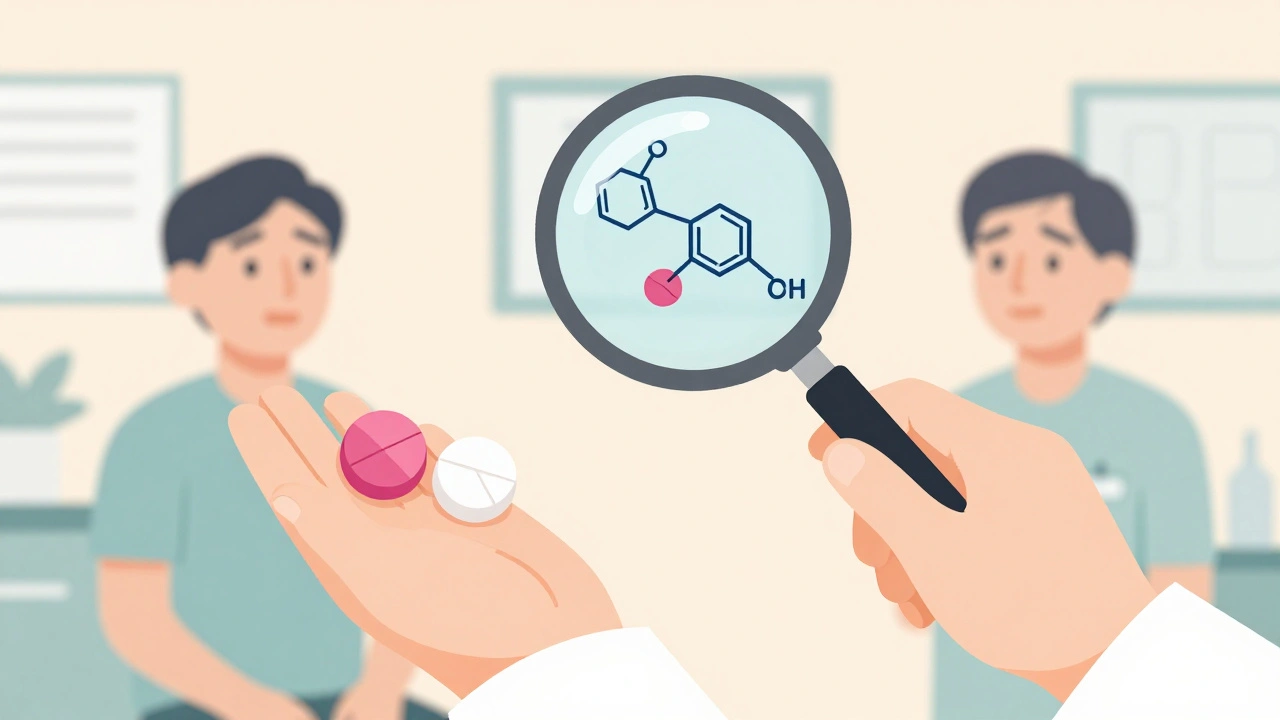
Why Do People Stop Taking Their Generic Meds?
Here’s the real problem: confusion. A 2021 study in JAMA Internal Medicine found that 14.2% of patients stop taking their chronic medication when they get a different-looking generic. That’s not because it doesn’t work - it’s because they think it’s wrong. One case from Brown University Health tells the story: a 72-year-old woman with high blood pressure stopped taking her amlodipine for 11 days after her pill changed from white to pink. Her blood pressure spiked to 198/112. She ended up in the ER. She wasn’t being careless - she just didn’t know that pills can change without changing effectiveness. It’s not just older adults. On Reddit’s r/pharmacy, a thread asking about pill changes got 147 comments. Two-thirds of respondents said they felt anxious or confused when their generic looked different. That’s a big deal. Medication errors related to appearance make up about 3% of all pharmacy mistakes, according to UMass Memorial Health.How Pharmacies Are Trying to Fix This
Pharmacies know this is a problem - and they’re trying to fix it. Chain pharmacies like CVS and Walgreens started using “Generic Appearance Alerts” in 2022. When a patient gets a pill that looks different from their last refill, the system flags it. The pharmacist then steps in to explain: “This is the same medicine. Just a different manufacturer.” Many independent pharmacies now offer “medication synchronization,” which means they try to keep you on the same generic brand each time. That way, your pill looks the same month after month. Some pharmacies even give you a photo of your pill on the prescription label. Humana’s patient education campaign showed that when people see a picture of their pill and are told, “The color doesn’t change how it works,” they’re 22% less likely to quit taking it.What This Costs - and What It Saves
The U.S. spends $135 billion a year on generic drugs. That’s 90% of all prescriptions filled. And it’s saving the country billions. In 2022 alone, generics saved the healthcare system $313 billion. Over the last decade, that’s over $2.2 trillion. But the visual differences? They’re costing money too. Because people stop taking their meds, Medicare Part D spends an extra $1.2 billion a year on avoidable hospital visits. Generic manufacturers spend an average of $2.1 million per drug just to design a version that’s different enough to meet trademark laws - but still works the same.
What’s Changing? What’s Next?
The FDA is starting to rethink this. In 2023, they released draft guidance suggesting that generic makers should try to match the brand-name pill’s appearance when possible - not because it’s required, but because it helps patients. Some big generic companies like Teva and Mylan have already started doing this voluntarily for common drugs like atorvastatin and lisinopril. Their results? A 17.3% increase in patients sticking with their meds. A new federal law passed in 2023 - the Elijah E. Cummings Lower Drug Costs Now Act - requires the Department of Health and Human Services to create standards for reducing appearance-related errors by June 2025. That could mean standardized colors, shapes, or even QR codes on pills that link to info about the drug. The bottom line? The system is changing - slowly. But right now, the rules are still based on 1980s trademark law, not 2025 patient needs.What You Should Do
If your pill looks different:- Don’t stop taking it.
- Don’t assume it’s wrong.
- Ask your pharmacist: “Is this the same medicine?”
- Ask to see a picture of your pill on their system.
- Check the label - the active ingredient and dose should match your old pill exactly.
When to Be Concerned
There’s one exception: if you start feeling worse after switching - new side effects, dizziness, chest pain, or your condition gets worse - call your doctor. But don’t assume it’s because the pill looks different. It might be something else. Talk to a professional. Don’t guess.Final Thought
Generic drugs aren’t second-rate. They’re smart, safe, and affordable. The fact that they look different isn’t a flaw - it’s a legal quirk. And if you’ve been avoiding generics because of how they look, you’re missing out on savings that could help you afford other things - like healthy food, doctor visits, or even a weekend away. The medicine inside? It’s the same. The difference is just skin deep.Why do generic drugs look different from brand-name drugs?
Generic drugs look different because U.S. trademark laws prevent them from copying the exact appearance of brand-name drugs. This includes color, shape, size, and markings. The active ingredient, strength, and effectiveness are identical, but inactive ingredients like dyes and fillers are changed to create visual distinction.
Are generic drugs less effective than brand-name drugs?
No. Generic drugs must meet the same FDA standards for bioequivalence as brand-name drugs. They deliver the same amount of active ingredient into your bloodstream at the same rate. Studies show the difference in absorption is typically under 4%, well within the FDA’s 20% safety margin.
Can changing the appearance of my pill affect how it works?
No. Changes in color, shape, or size don’t affect how the medicine works. Only the active ingredient matters for treatment. Inactive ingredients like coatings or fillers may change how quickly the pill dissolves slightly, but this is tightly controlled and doesn’t impact overall effectiveness.
Why do I sometimes get a different-looking generic even when I ask for the same one?
Pharmacies often switch generic manufacturers based on cost, availability, or contracts with insurers. There’s no rule requiring them to stick with one brand. If you prefer a specific version, ask your pharmacist if they can order it - though it may cost more.
Should I be worried if my generic pill looks different from my last refill?
No, not if the active ingredient and dose match. Always check the label. If you’re unsure, ask your pharmacist to confirm it’s the same medicine. Most pharmacies now offer pill images or alerts when a change occurs to help avoid confusion.
Are there any drugs where appearance changes matter more?
For drugs with a narrow therapeutic index - like warfarin, levothyroxine, or phenytoin - the FDA requires stricter manufacturing controls. But even these must still look different from the brand-name version. The key is consistency: if you switch between generics, stick with the same manufacturer if possible to avoid confusion.
Can I request the brand-name drug instead of the generic?
Yes, but your insurance may require you to pay more - sometimes much more. Your doctor can write “Dispense as Written” or “Do Not Substitute” on the prescription, but this usually means higher out-of-pocket costs. Generics are just as safe and effective, and saving money can help you stick with your treatment long-term.


Written by Felix Greendale
View all posts by: Felix Greendale