
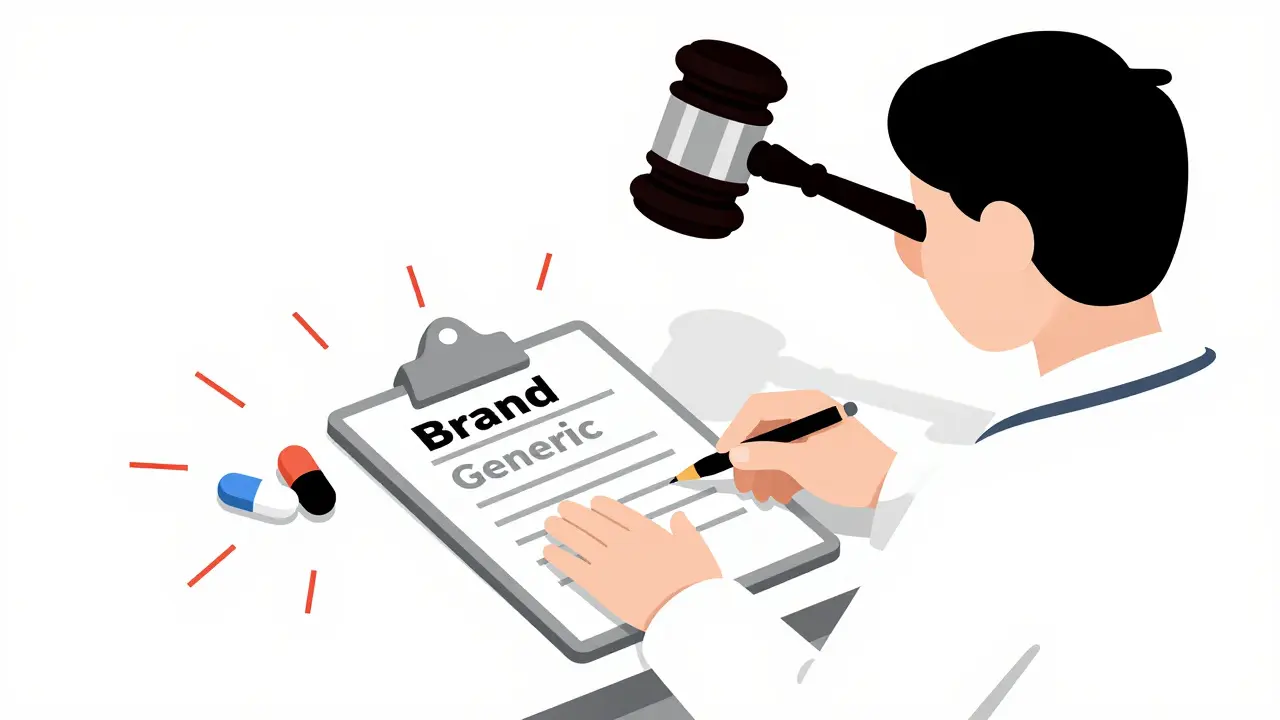
When a doctor writes a prescription for a generic drug, they’re not just choosing a cheaper option-they’re stepping into a legal gray zone that could put their career at risk. The rise of generic medications has saved the U.S. healthcare system billions, but it’s also shifted liability squarely onto the shoulders of physicians. Physician liability for injuries caused by generic drugs has become one of the most overlooked and dangerous legal issues in modern medicine.
Here’s the reality: if a patient is harmed by a generic drug, the manufacturer can’t be sued. That’s not a rumor. It’s the law. In 2011 and 2013, the U.S. Supreme Court ruled in PLIVA v. Mensing and Mutual Pharmaceutical v. Bartlett that generic drug makers can’t be held liable for failing to update warning labels. Why? Because federal law forces them to copy the brand-name label exactly-they’re not allowed to change it, even if new safety data emerges. So when a patient suffers severe side effects-like skin loss, liver failure, or a rare allergic reaction-the only legal target left is the doctor who prescribed it.
How Liability Shifts from Manufacturers to Doctors
Before these rulings, if a drug caused harm, patients sued the company that made it. That’s how tort law works: whoever made the product bears responsibility. But with generics, that door is slammed shut. The Supreme Court said generic manufacturers are shielded because they’re stuck following FDA rules. That left patients with nowhere to turn. And guess who’s left holding the bag? The prescribing physician.
Think about it this way: if you prescribe a brand-name drug and something goes wrong, the manufacturer still has legal exposure. They can be sued for failing to warn, for defective design, for misleading advertising. But if you prescribe the same drug as a generic, the manufacturer is legally immune. The patient’s only option? Sue you.
A 2020 report from the American Bar Association showed a 37% spike in lawsuits targeting doctors over generic drug injuries between 2014 and 2019. In one case, a woman developed toxic epidermal necrolysis after taking a generic version of Sulindac. She lost 65% of her skin, spent 50 days in a burn unit, and was permanently disfigured. The generic maker couldn’t be sued. The lawsuit went straight to the doctor who prescribed it.
State Laws Create a Patchwork of Risk
Not every state treats this the same way. In 49 states, pharmacists are allowed to swap a brand-name drug for a generic unless the doctor writes “dispense as written” on the prescription. That’s standard practice. But here’s the catch: 17 of those states don’t even require the pharmacist to tell the doctor that a substitution happened. So you could prescribe a brand-name drug, and the patient walks out with a generic-no notice, no warning, no paper trail. And if something goes wrong? You’re on the hook.
Some states have tried to fix this. Illinois, for example, ruled in Guvenoz v. Target Corp. that generic manufacturers do have a duty to update their labels if a drug is inherently dangerous. That means doctors in Illinois have slightly less exposure. But in most states? The federal preemption doctrine holds strong. And that leaves physicians in a legal minefield.
Alabama tried to help doctors in 2014 by letting patients sue brand-name manufacturers for harm caused by generics. It was a lifeline. But in 2015, the state legislature passed SB80, shutting that door. Now, even the brand-name maker is protected. That means doctors are the only deep pockets left in nearly every case.
What Doctors Are Doing to Protect Themselves
Physicians aren’t sitting idle. A 2022 survey by the American Medical Association found that 68% of doctors feel more anxious about prescribing generics. And 42% admit they sometimes choose the more expensive brand-name drug-just to avoid liability.
But that’s not always feasible. Insurance won’t cover it. Patients can’t afford it. So instead, doctors are changing how they practice.
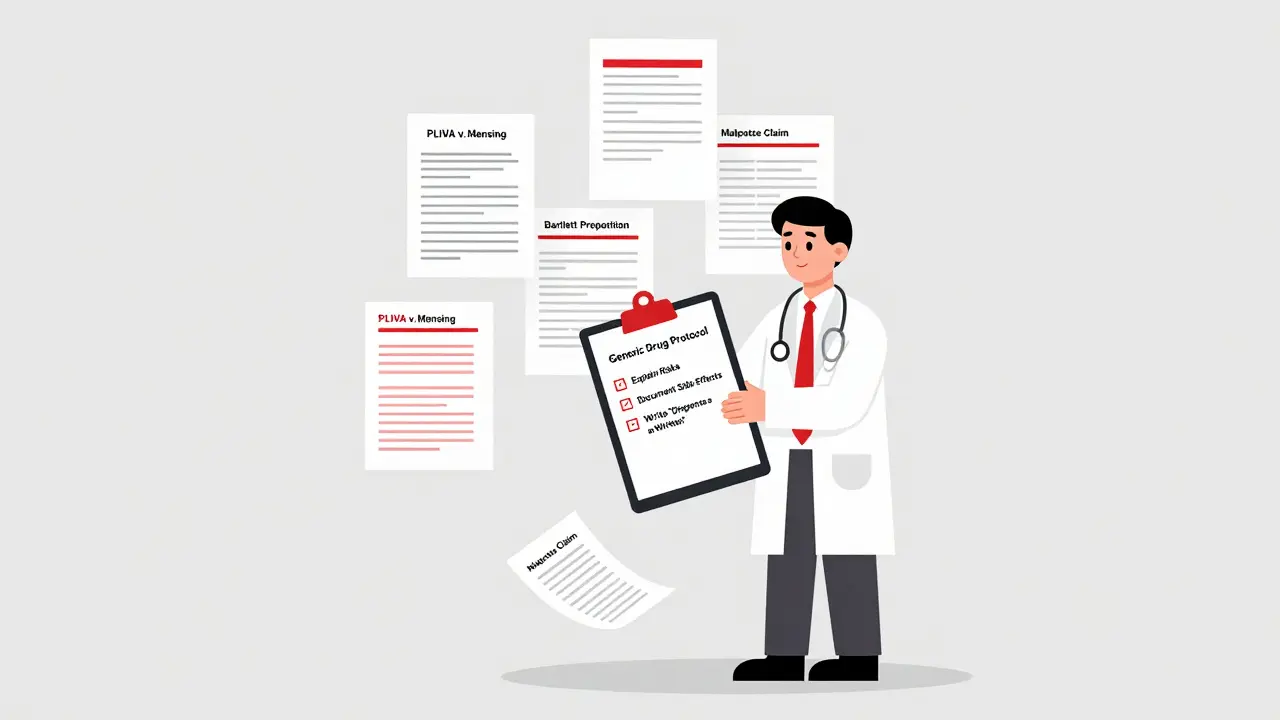
- They’re writing “dispense as written” on prescriptions for high-risk drugs like warfarin, levothyroxine, and anti-seizure medications-where even a small change in potency can cause harm.
- They’re documenting every conversation about side effects. Not just “medication discussed.” They’re writing: “I explained that this drug can cause dizziness, blurred vision, and liver toxicity. I advised against driving or operating heavy machinery.”
- Electronic health records now have mandatory fields for generic substitution counseling. Epic Systems added them in 2021. If you skip it, the system won’t let you sign off.
And it’s working. A 2023 report from Medical Risk Management found that doctors who document detailed counseling reduce their liability exposure by 58%. That’s not a small number. That’s life-changing.
The Insurance Cost Is Rising
Liability insurers aren’t blind to this trend. The American Professional Agency reported that physicians who routinely authorize generic substitutions without proper documentation pay an average 7.3% higher malpractice premium. That’s not a one-time fee-it’s an ongoing cost. And it’s only going up.
Between 2013 and 2022, premiums for primary care physicians jumped 22.7%. That’s not inflation. That’s risk. The more generic prescriptions you write, the more likely you are to be sued. And insurers are pricing that in.
Real Stories From the Front Lines
On physician forums like Sermo, threads like “Generic drug liability nightmare” have over 280 comments. One doctor from Massachusetts wrote: “I now add 15 to 20 minutes to every visit to explain side effects. I print out warning sheets. I have patients sign them. I scan them into the record. It’s exhausting-but I’d rather be exhausted than sued.”
A Reddit user named PharmD2020 shared a terrifying story: their patient developed Stevens-Johnson syndrome after a generic substitution. The manufacturer couldn’t be sued. The pharmacist didn’t notify the doctor. And now, the physician is facing a malpractice claim-even though they followed every standard guideline.
The National Patient Safety Foundation recorded 217 adverse events tied to generic substitution between 2015 and 2020. That’s not a glitch. That’s a pattern.
What You Need to Do Now
If you’re prescribing generics-and you are, because 90% of prescriptions in the U.S. are generic-you need to act. Here’s what works:
- Use “dispense as written” for high-risk drugs. Warfarin, levothyroxine, phenytoin, cyclosporine-these aren’t interchangeable. Even small differences in absorption can be deadly.
- Document every counseling session. Don’t say “discussed side effects.” Say: “I explained the risk of liver damage, muscle pain, and severe rash. I advised immediate reporting of yellowing skin or dark urine.”
- Know your state’s substitution laws. If your state doesn’t require pharmacist notification, assume substitution happened without your knowledge.
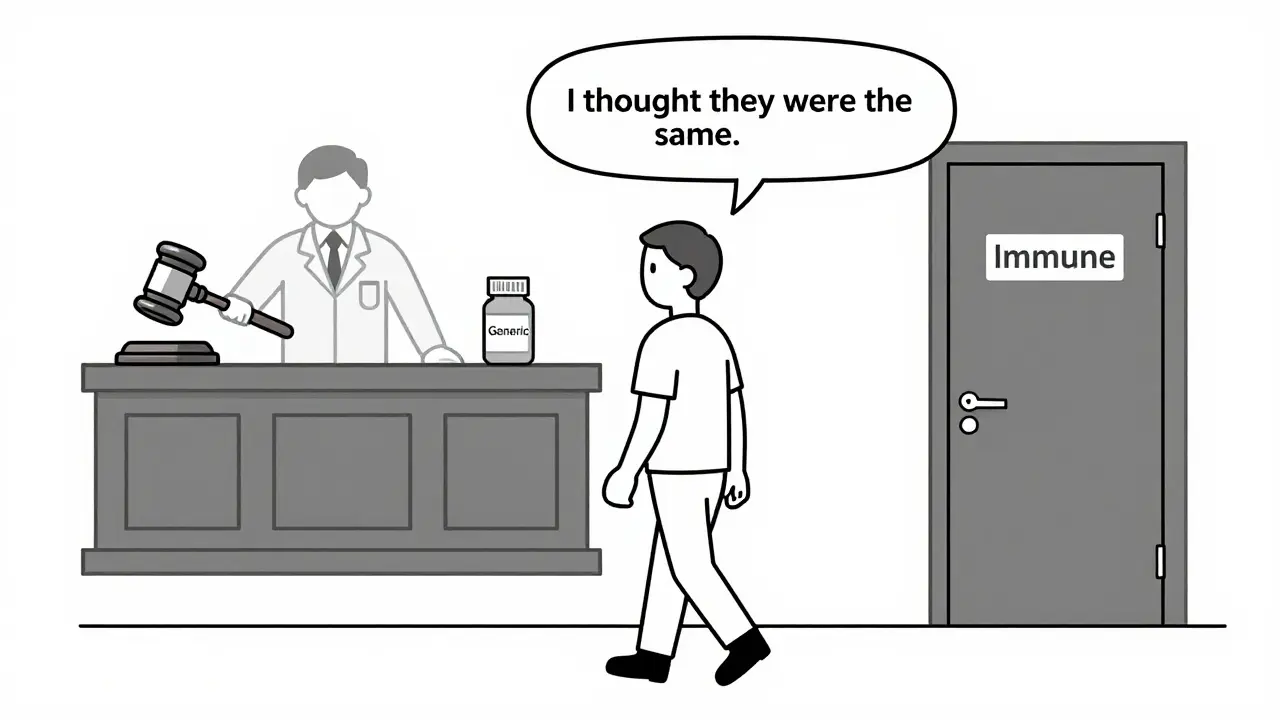
- Don’t assume the patient knows. Many patients think “generic” means “identical.” It doesn’t. It means “same active ingredient.” That’s not the same as “same effect.”
The bottom line? You’re not just a prescriber anymore. You’re a legal gatekeeper. The system has shifted the burden to you. Ignore it, and you’re gambling with your license. Address it, and you protect yourself, your patients, and your practice.
Can a physician be sued if a patient is harmed by a generic drug?
Yes. Because federal law shields generic drug manufacturers from liability for failure-to-warn claims, patients who are injured often turn to the prescribing physician. Courts have upheld lawsuits against doctors when there’s evidence they failed to properly counsel the patient, didn’t document risks, or prescribed a drug with known dangers without taking precautions.
Why can’t generic drug manufacturers be sued?
The U.S. Supreme Court ruled in 2011 and 2013 that generic manufacturers can’t be held liable for inadequate warning labels because federal law requires them to use the exact same label as the brand-name drug. They’re not allowed to update it, even if new safety data emerges. This is called the Mensing/Bartlett preemption doctrine.
What drugs carry the highest liability risk when prescribed as generic?
Drugs with narrow therapeutic indices carry the highest risk. These include warfarin (blood thinner), levothyroxine (thyroid hormone), phenytoin and carbamazepine (anti-seizure drugs), and cyclosporine (immunosuppressant). Small differences in absorption between generics can lead to overdose, underdose, or toxic reactions. Many states require “dispense as written” for these drugs.
Does documenting patient counseling really reduce liability?
Yes. A 2023 report from Medical Risk Management found that physicians who document detailed, specific counseling about generic substitution risks reduce their liability exposure by 58%. Generic notes like “medication discussed” are not enough. You need to record the exact side effects explained and the advice given.
Are there any states where doctors have less liability risk?
Illinois is one exception. In 2016, the Illinois appellate court ruled in Guvenoz v. Target Corp. that generic manufacturers must update their labels if a drug is inherently dangerous-even if federal law says they can’t. This means doctors in Illinois may face less liability for certain drugs. But in 42 other states, federal preemption dominates, leaving physicians as the primary target for lawsuits.
The legal landscape won’t change overnight. Until Congress or the courts reset the rules, physicians are on the front line. The choice isn’t whether to prescribe generics-it’s how you protect yourself while doing it. Document everything. Know the law. And never assume the patient understands the difference between brand and generic. Their safety-and your career-depends on it.


Written by Felix Greendale
View all posts by: Felix Greendale