
People turn to SAMe hoping for a natural lift when antidepressants aren’t doing enough. But mixing SAMe with prescription antidepressants isn’t as simple as popping an extra pill. It can be dangerous - and many don’t realize it until it’s too late.
What SAMe Actually Does in Your Brain
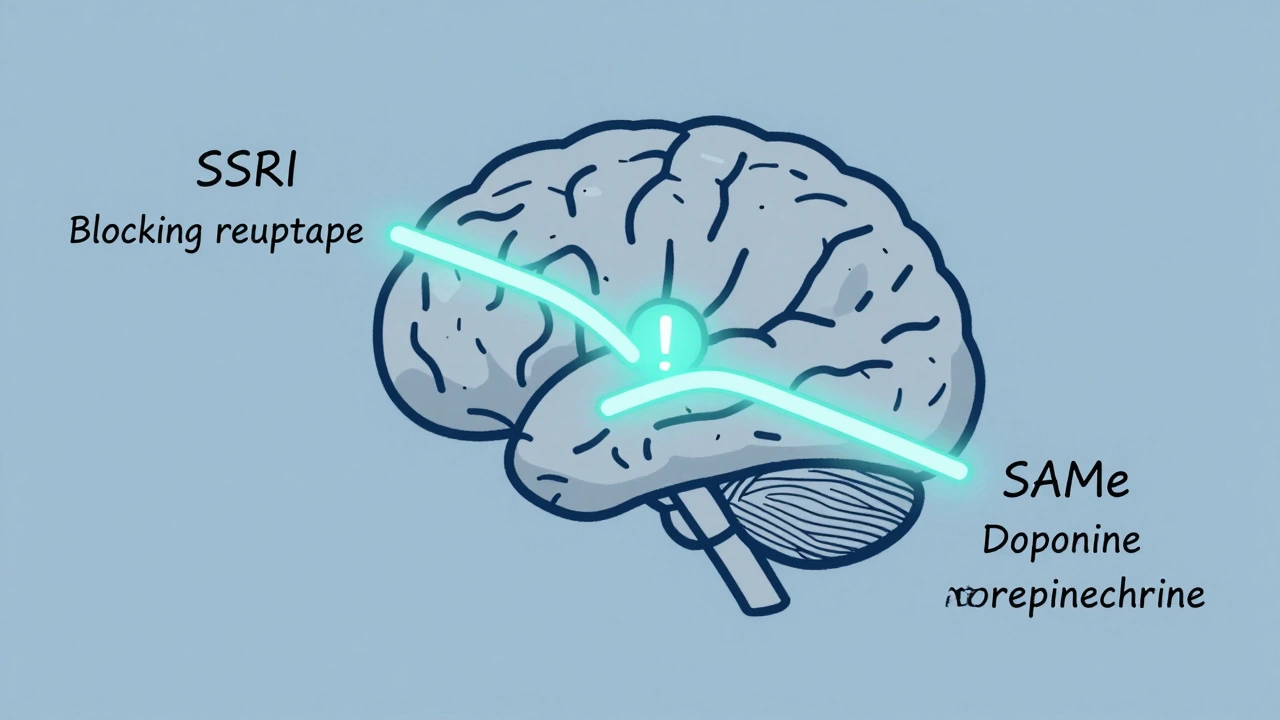
SAMe, or S-adenosylmethionine, isn’t just another supplement. It’s a compound your body naturally makes, involved in over 200 chemical reactions. One of its biggest jobs? Helping produce serotonin, dopamine, and norepinephrine - the same brain chemicals that antidepressants target.
Unlike SSRIs that block serotonin reuptake, SAMe boosts the actual production of these neurotransmitters by donating methyl groups. Studies show it can increase serotonin synthesis by 20-30% compared to placebo. That’s why some people feel better faster - improvements can show up in as little as 7-10 days, while SSRIs often take 4 weeks.
But here’s the catch: SAMe doesn’t just affect serotonin. It also influences dopamine and norepinephrine pathways. That’s good if you’re stuck in a low-motivation slump, but risky if you’re already on a drug that does the same thing.
The Real Risk: Serotonin Syndrome
Combining SAMe with SSRIs, SNRIs, or even MAOIs isn’t just a "use caution" situation. It’s a major interaction with a serious outcome: serotonin syndrome.
This isn’t a myth. It’s real. And it’s not rare.
According to the Mayo Clinic’s 2023 drug database, SAMe and antidepressants together are flagged as a "Major - Use Caution" interaction. The Natural Medicines Database gives it a severity score of 7.3 out of 10. That’s higher than many known dangerous drug combos.
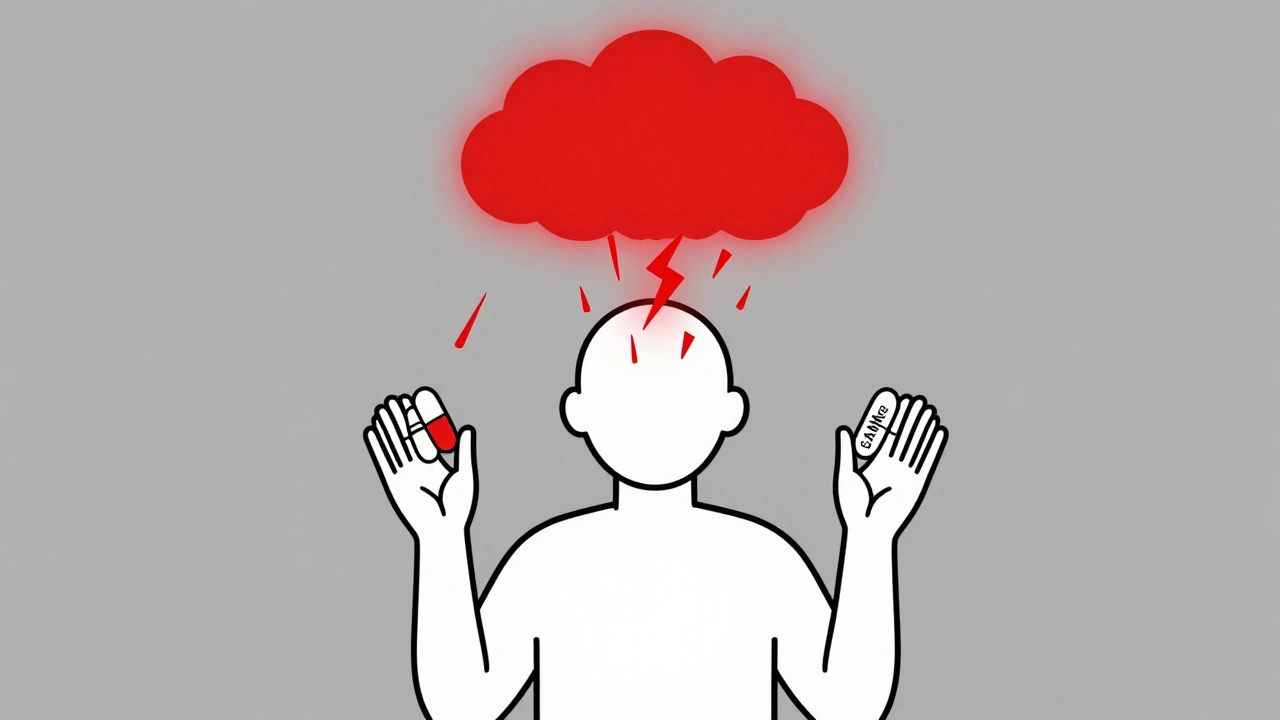
Serotonin syndrome happens when your brain gets flooded with too much serotonin. Symptoms include:
- Racing heart
- Muscle stiffness or twitching
- High body temperature (over 38°C)
- Confusion or agitation
- Excessive sweating
- Shivering or tremors
One Reddit user, u/DepressionWarrior2020, started 400mg of SAMe with 20mg of Prozac. Within three days, he ended up in the ER with muscle rigidity and confusion. His doctors confirmed serotonin syndrome.
It’s not always that dramatic. Some people report mild anxiety, restlessness, or insomnia - early red flags. But if you ignore them, it can escalate fast.
Who Should Avoid This Combo?
Not everyone who takes SAMe and antidepressants has a problem. But some people are at much higher risk.
High-risk groups include:
- Those on SSRIs like fluoxetine (Prozac), sertraline (Zoloft), or escitalopram (Lexapro)
- People on SNRIs like venlafaxine (Effexor) or duloxetine (Cymbalta)
- Anyone taking MAOIs - even if they’re off them for less than 2 weeks
- Those with a history of bipolar disorder (SAMe can trigger mania)
- People with severe depression - SAMe works poorly here, with remission rates under 20%
Studies show that 85% of serotonin syndrome cases linked to SAMe happen within the first 2-4 weeks of starting the combo. That’s when your body is adjusting to the double hit on serotonin.
And here’s something most people don’t know: SAMe isn’t regulated like a drug. The FDA doesn’t require proof it works before it hits shelves. A 2022 ConsumerLab analysis found 32% of SAMe supplements contained less active ingredient than labeled. Some had only 75% of what was on the bottle. That means you could be taking a weak dose one day and a dangerous one the next.
What Does the Science Say About Effectiveness?
SAMe isn’t a miracle cure. In mild-to-moderate depression, it works - but not as well as standard antidepressants.
Meta-analyses show:
- Response rate: 35-50% (vs. 60-70% for SSRIs)
- Reduction in depression scores (HAM-D): ~12.3 points (vs. 15.7 for escitalopram)
- Remission rate in severe depression: only 18% (vs. 42% for venlafaxine)
It does have one clear advantage: it helps with depression that comes with chronic pain. A 2018 study found SAMe added to duloxetine reduced arthritis pain 30% more than duloxetine alone. That’s why some doctors suggest it for people with both depression and joint pain.
But for pure depression? The evidence just doesn’t support using it as a first-line treatment. It’s better suited as a last-resort add-on - and even then, only under supervision.
How to Use SAMe Safely (If at All)
If you and your doctor decide to try SAMe with an antidepressant, here’s how to do it without risking your health:
- Start low. Begin with 200mg twice daily. Never start at 800mg or 1600mg.
- Wait and watch. Monitor for symptoms of serotonin syndrome for at least 4 weeks. Keep a journal of mood, sleep, heart rate, and muscle tightness.
- Take it with food. This reduces nausea and stomach upset - a common side effect reported in 28% of users.
- Split doses. Take one in the morning and one at lunch. Avoid taking it after 3 p.m. - it can cause insomnia in 18% of users.
- Don’t stop suddenly. If you need to quit, taper down over 1-2 weeks. Withdrawal can cause rebound anxiety.
Also, buy only from trusted brands. Look for those that have been tested by ConsumerLab, USP, or NSF. Avoid Amazon generic brands - they’re the most likely to be underdosed or contaminated.
Why Some People Swear by It
Not everyone has a bad experience. On Healthline’s forum, SarahJ took 800mg of SAMe with Zoloft for 8 months after her depression didn’t fully respond. Her PHQ-9 score dropped from 16 (moderate depression) to 7 (mild). She felt more energy, slept better, and had fewer emotional crashes.
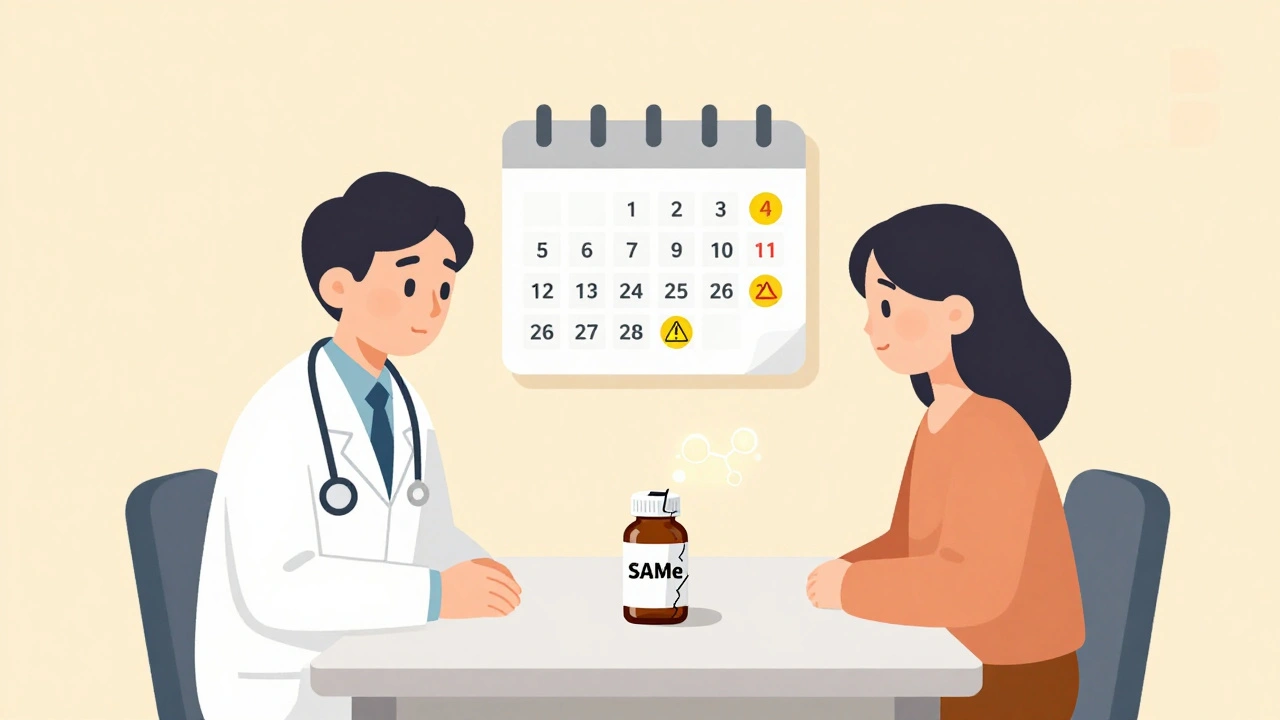
She had one key advantage: her doctor monitored her closely. She got blood tests, checked her heart rate weekly, and adjusted the dose slowly.
That’s the difference. The people who succeed with this combo aren’t self-treating. They’re working with a professional who understands the risks.
What’s Next for SAMe?
The FDA issued warning letters to three SAMe manufacturers in 2023 for claiming it treats depression - because it doesn’t have approval to make those claims.
A major NIH-funded trial (NCT04821234) is testing SAMe with escitalopram. Results are due in mid-2024. If they show clear safety and benefit, it could change guidelines.
Meanwhile, researchers are developing new versions of SAMe - like SAMe-PEG and SAMe-phospholipid complexes - that may reduce interaction risks by 40%. But those are still in early testing.
For now, SAMe remains a gray area. It’s not a drug. It’s not proven safe in combination. But it’s widely available, heavily marketed, and used by millions.
The bottom line? Don’t add SAMe to your antidepressant without talking to your doctor. And if you’re already doing it - stop, and get help.
What to Do If You Think You Have Serotonin Syndrome
If you’re taking SAMe and an antidepressant and feel any of these symptoms:
- Heart rate over 120 bpm
- Muscle rigidity or spasms
- Confusion or hallucinations
- Temperature over 38.5°C
Call 911 or go to the ER immediately. Serotonin syndrome can be fatal if untreated. There’s no home remedy. No herbal tea. No waiting it out.
Doctors treat it with benzodiazepines to calm the nervous system and cyproheptadine to block serotonin. Time matters.


Written by Felix Greendale
View all posts by: Felix Greendale