

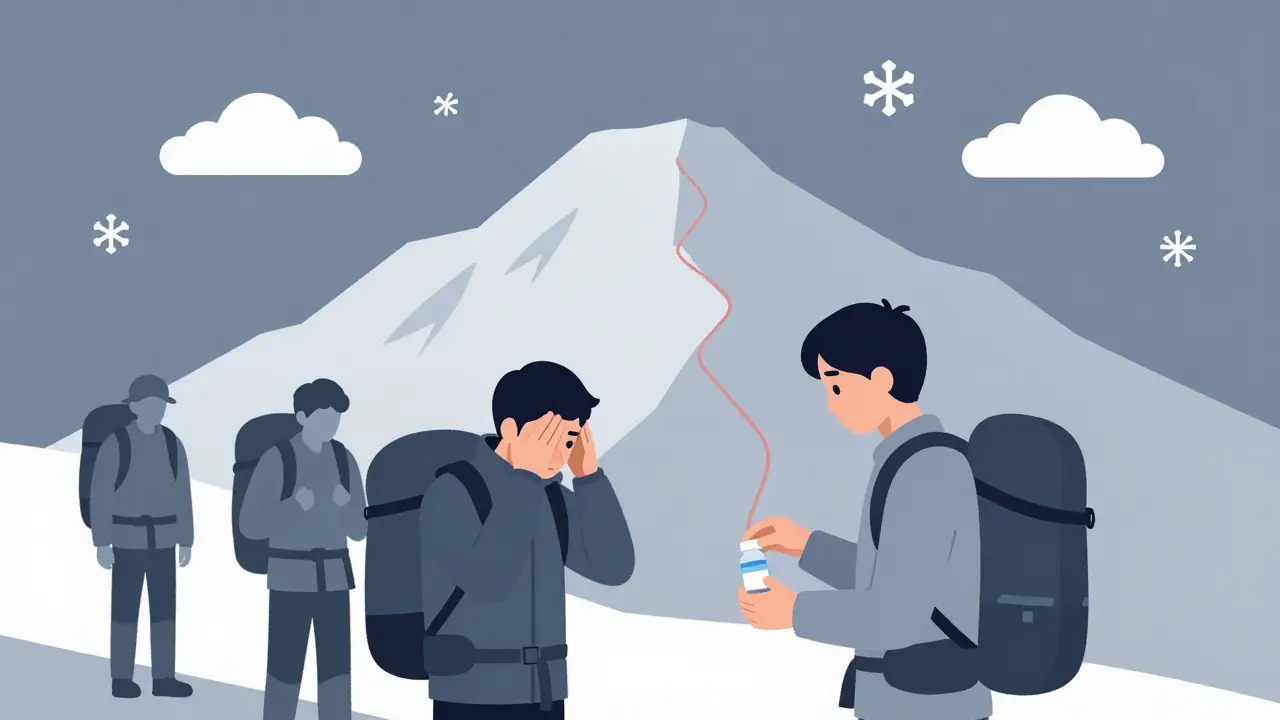
When you’re heading into the mountains for a pilgrimage or a long trek, your body faces challenges most people never think about until it’s too late. At 14,000 feet, the air holds less than half the oxygen it does at sea level. Your heart races, your head pounds, and simple tasks like walking to the bathroom become exhausting. And if you’re diabetic, asthmatic, or on daily medication, the risks multiply fast. High-altitude medications aren’t optional-they’re lifesavers. Yet, too many travelers skip proper preparation, assuming they’ll be fine or that medicine will be available when needed. It’s not that simple.
Know Your Risks Before You Go
Altitude sickness doesn’t wait for you to be ready. It strikes fast, often within hours of reaching 8,000 feet. About 25% of people get mild symptoms like headaches and nausea. But up to 85% of those who climb quickly above 12,000 feet-like pilgrims flying into Lhasa or trekkers landing at Everest Base Camp-experience something worse. Acute Mountain Sickness (AMS) can turn into High Altitude Pulmonary Edema (HAPE) or High Altitude Cerebral Edema (HACE), both life-threatening. HAPE floods the lungs with fluid. HACE swells the brain. Neither waits for a hospital. You can’t predict who will get sick. Age, fitness, and past experience don’t guarantee safety. Even elite athletes collapse. The only real protection is preparation. And that starts long before you pack your boots.Essential Medications for High Altitude
There are four key medications every trekker and pilgrim should carry-not just in case, but as part of their daily routine.- Acetazolamide (Diamox): This is the go-to for preventing AMS. Take 125 mg twice a day, starting one day before you begin climbing and continuing for three days after reaching your highest elevation. It helps your body breathe faster, which speeds up acclimatization. Side effects? More trips to the bathroom and tingling fingers. About two-thirds of users report this. It’s not dangerous, but it’s noticeable.
- Dexamethasone: This steroid isn’t for prevention-it’s for emergencies. If someone shows signs of HACE (confusion, trouble walking, vomiting), give 8 mg right away, then 4 mg every 6 hours. It reduces brain swelling fast. But it’s not a cure. You still need to descend immediately.
- Nifedipine (extended-release): Used for HAPE. Take 20 mg every 12 hours if someone is struggling to breathe, coughing up frothy sputum, or turning blue. It opens up the blood vessels in the lungs. Again, this buys time-not a solution. Descent is the only real fix.
- Supplemental oxygen: Portable tanks or concentrators can be critical. Many trekkers carry 2-4 liters for emergencies. Some pilgrimage routes now have oxygen stations, but don’t count on them.
Don’t rely on local pharmacies. In 2013, a survey of health camps along major pilgrimage trails found that 89% didn’t have acetazolamide, dexamethasone, or nifedipine in stock. You can’t afford to gamble.
Don’t Forget the Basics
Your high-altitude kit isn’t just about altitude. You need to cover the other common dangers too.- Diarrhea: Affects 60% of Everest trekkers. Pack azithromycin (500 mg daily for three days) or rifaximin. Avoid tap water, ice, and raw veggies. Boil or filter everything.
- Pain and fever: Ibuprofen (400 mg) works better than acetaminophen at altitude. It reduces inflammation and helps with headaches caused by low oxygen.
- Allergies and itching: Diphenhydramine (25-50 mg) is essential for reactions to insect bites, food, or altitude-induced rashes.
- Wound care: Antibiotic ointment, sterile gauze, and hydrocortisone cream for skin irritations. Blisters, cuts, and fungal infections are common when you’re sweating for days.
And if you take daily meds for blood pressure, diabetes, thyroid, or depression? Bring double your supply. Store them properly. Cold temperatures can ruin insulin. Glucometers give false readings below freezing. A 2022 survey found that 29% of medication issues came from temperature damage-not running out.
Storage and Travel Rules
Medications don’t survive random packing. Heat, moisture, and freezing ruin them.- Keep everything in original bottles with pharmacy labels. This avoids customs problems and proves they’re yours.
- Use waterproof, insulated containers. Some cost $30-$50 but can maintain 59-77°F (15-25°C) for days-even at -20°F.
- For insulin: Use an insulated case with a cold pack. Never let it freeze. Test your glucometer at altitude before you rely on it.
- For controlled substances (painkillers, ADHD meds, anxiety drugs): Check if your destination requires special permits. In the U.S., contact the DEA. In Europe or Asia, research local laws. About 17% of trekking groups needed paperwork in 2021.
- Carry a letter from your doctor listing all medications, dosages, and medical conditions. Translation helps if you’re in Nepal, Tibet, or Peru.
Pre-Trip Planning Isn’t Optional
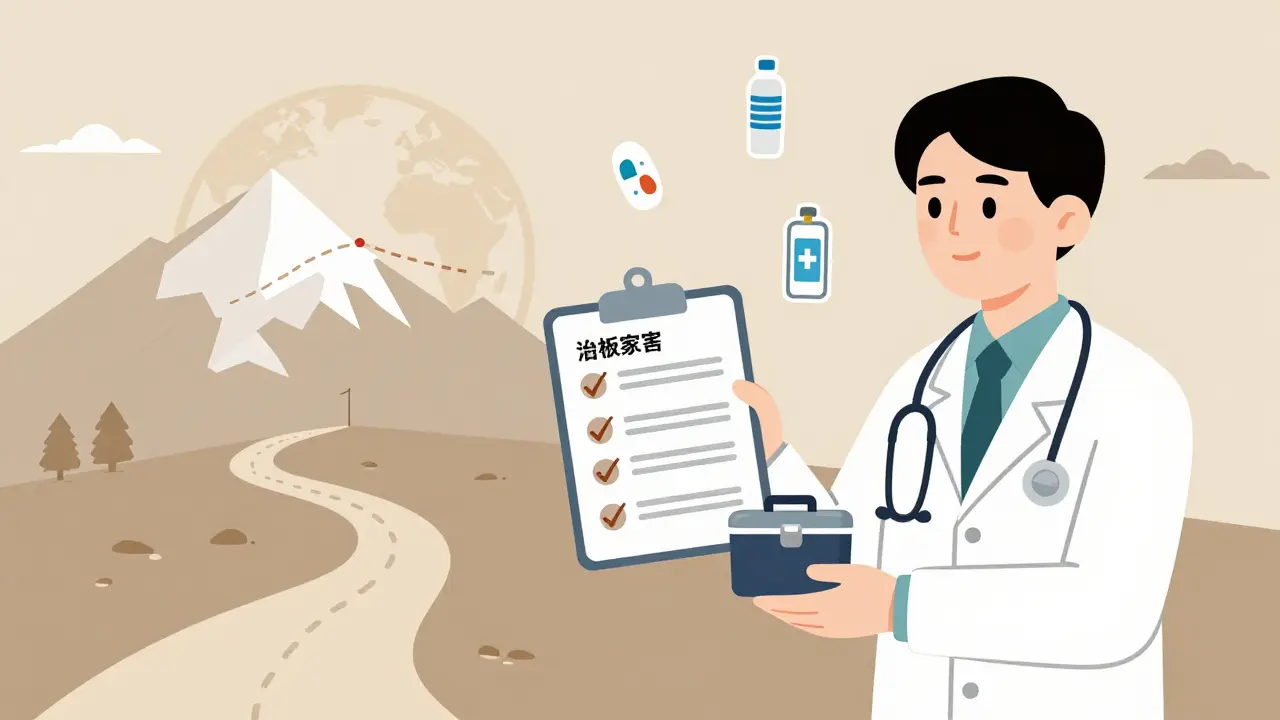
The CDC says the pre-travel consultation is your best shot at avoiding disaster. And they’re right.- See your doctor 4-6 weeks before you leave. Not two days before. You need time to get prescriptions, adjust dosages, and test your fitness.
- Discuss your route. If you’re flying straight to 12,000 feet, your doctor may prescribe acetazolamide even if you’ve never had altitude sickness.
- Ask about your chronic conditions. Can your heart handle the climb? Is your asthma stable? Do you need a stress test?
- Get a full physical. The Himalayan Rescue Association says 83% of serious altitude complications are preventable with proper screening.
Don’t skip this step because you feel fine. Many people with undiagnosed heart conditions or sleep apnea collapse at altitude. Your doctor isn’t there to scare you-they’re there to keep you alive.
What to Do If Things Go Wrong
If you or someone in your group starts showing signs of HACE or HAPE-headache that won’t quit, confusion, coughing blood, extreme fatigue-don’t wait. Don’t hope it gets better.- Stop climbing. Immediately.
- Descend at least 1,000-2,000 feet. Even 500 feet can help.
- Give dexamethasone or nifedipine if you have them.
- Use supplemental oxygen if available.
- Call for help. Many trekking routes now have satellite phones or emergency radios. Know how to use one before you go.
Evacuation costs $4,000-$10,000. Insurance rarely covers it unless you were prepared. A friend of mine lost his insulin to freezing temperatures at 14,000 feet. He was airlifted out. The bill? $4,200. He didn’t have travel insurance. He still pays for it.
Why Most People Fail
The biggest mistake? Thinking it won’t happen to them.- They skip the doctor’s visit.
- They buy cheap meds from street vendors.
- They pack everything in a backpack with no insulation.
- They assume the lodge will have Diamox.
- They ignore early symptoms because they’re “just tired.”
There’s no shame in being cautious. Pilgrimages and treks are spiritual, physical, and emotional journeys. You don’t want your trip to end in an emergency room-or worse.
The good news? More places are catching on. Nepal’s 2021 Altitude Sickness Prevention Campaign distributed 15,000 pre-packed kits with acetazolamide and education. Hospitalizations dropped 22%. Trekking companies are now required to offer medical checklists. By 2027, 95% of them will make pre-trip consultations mandatory.
You don’t have to wait for the system to catch up. Do it yourself. Be the one who’s ready.
Can I buy altitude sickness pills at the airport or local shop?
Don’t rely on it. In 89% of health camps along major pilgrimage routes, essential medications like acetazolamide and dexamethasone were not in stock as of 2013. Even in Kathmandu or Lhasa, pharmacies may not carry the right brands or dosages. Always bring your own supply from home with a prescription.
Is Diamox safe for everyone?
No. People with severe sulfa allergies (about 3-6% of the population) should avoid acetazolamide. If you’re allergic to antibiotics like sulfamethoxazole, talk to your doctor. Alternatives include dexamethasone for prevention, but it’s not ideal for long-term use. Your doctor can help you find a safe option.
How much water should I drink at high altitude?
Drink 4 to 5 liters daily. Dehydration worsens altitude sickness. Your body loses water faster at high elevations because you breathe faster and the air is dry. Don’t wait until you’re thirsty. Sip constantly. Avoid alcohol and caffeine-they dehydrate you more.
Do I need to carry my insulin in a special container?
Yes. Insulin degrades by 25% in just 24 hours if it freezes. Even if it doesn’t freeze, extreme heat above 86°F can ruin it. Use an insulated, temperature-controlled case. Test your glucometer at altitude before relying on it-errors can hit 18% below freezing.
What if I’m on a tight schedule and can’t ascend slowly?
Slow ascent is the best prevention-but not always possible. If you’re flying to Lhasa (12,000 ft) or taking a rapid road trip to Mount Kailash, acetazolamide is your best tool. Start it a day before you arrive. Stay hydrated. Avoid sleeping pills. If you feel symptoms, don’t go higher. Rest. If it gets worse, descend. Your pilgrimage isn’t worth your life.
Are there any natural remedies that work for altitude sickness?
Garlic, coca leaves, ginger, or beet juice won’t prevent or treat serious altitude illness. Some people swear by them, but there’s no scientific proof. Acetazolamide, dexamethasone, and descent are the only proven methods. Don’t gamble your health on folklore.
Should I bring a portable hyperbaric bag?
For group treks or remote pilgrimages, yes. A Gamow bag can simulate lower altitude and buy hours of time until evacuation. But they’re expensive ($1,500+), heavy, and only used by about 5% of health camps. If you’re traveling solo, focus on descent plans and oxygen. For organized groups, consider renting one.
Written by Felix Greendale
View all posts by: Felix Greendale